CS 540: Intro to AI, Competition Projects
CS 540: Intro to AI (with Prof. Young Wu) at UW-Madison, had ten projects throughout the semester. We were allowed to use LLMs and the projects were all structured as competitions. They were graded based on the scores we got from each competition. Top 20% got 5/5, next 20% got 4/5 and so on. There was a trial and a real competition for each project. You could use the best score from both for the ranking. I wanted to share what strategies my group and I made for each project. This will mostly be helpful for future CS 540 students that have similar projects. However, anyone can take a look and try the same project! Lastly, thanks to Nick Newcomer, Samved Vivek and Professor Wu for a wonderful experience. ~🥪
Advice for future CS 540 students
(1) Find a group to talk about the project (it not only helps you to win, but think many more).
(2) Identify your goal for each project.
(3) Find a systematic way to achieve the goal.
(4) Participate on both the trial & real competition (it might save you or you might be able to try cool stuff).
A1: 3D shape recognition with neural networks (team project)
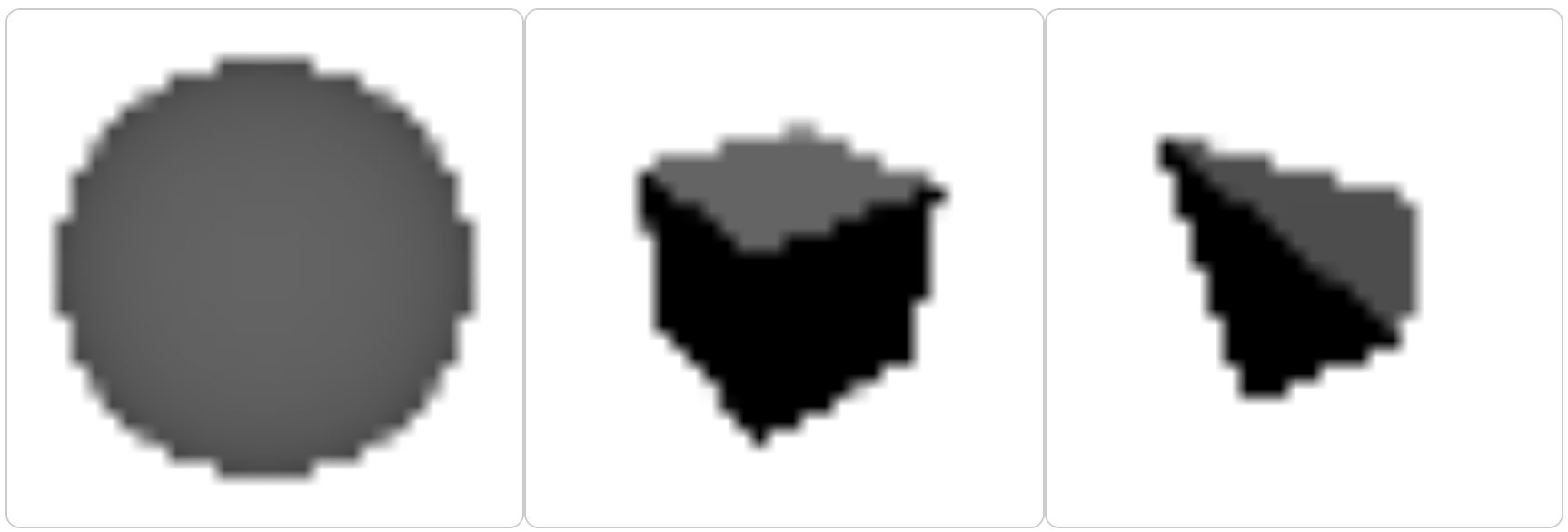 Project description: Train a neural network to recognize 3D shapes (sphere, cube,
tetrahedron). The neural network is connected with two hidden layers (ReLU activation, a maximum of 128 units),
input layer with 1024 units, and output layer with 3 units (softmax activation). The more certain your network is
about correct predictions on the test set, and the fewer units you use in hidden layers, the higher your score. The
test set was composed of the teaching team's set and the sets that the students submitted. Students mostly submitted
sets that only their networks could distinguish.
Project description: Train a neural network to recognize 3D shapes (sphere, cube,
tetrahedron). The neural network is connected with two hidden layers (ReLU activation, a maximum of 128 units),
input layer with 1024 units, and output layer with 3 units (softmax activation). The more certain your network is
about correct predictions on the test set, and the fewer units you use in hidden layers, the higher your score. The
test set was composed of the teaching team's set and the sets that the students submitted. Students mostly submitted
sets that only their networks could distinguish.
(1) Make correct predictions with higher confidence.
(2) Use fewer units.
Strategy: The overall strategy was to make correct predictions and submit tricky sets so that other players outside my team have trouble identifying the image.
(a) In order to achieve goal (1) we trained with a lot of images (like 40k images) with noise 5, 10, 15, 20, 40, 60 for each shape (sphere, cube, tetrahedron). The reason for this was because training the NN with above noise 60 or tricky data sets dropped our accuracy on easy images (noise below 60) and these were free points we should have gotten (mostly the set that the instructors submitted and some nice sets that students submitted). So we tried minimizing training with tricky data sets to avoid overfitting.
(b) We were able to optimize the number of hidden units to 32x16. It did no harm on the accuracy for goal (1)
and the network had enough space to "memorize" (storing the exact pixel patterns) the tricky dataset that we were
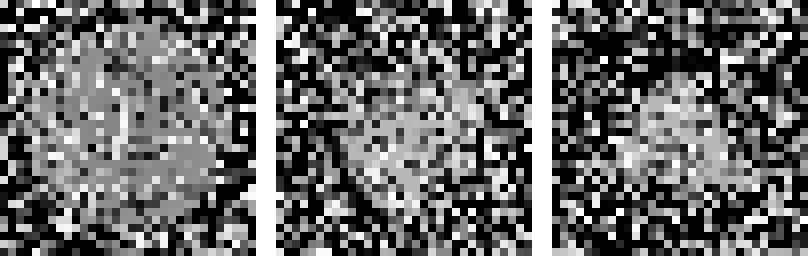
going to submit. Our tricky dataset was inverted pixels (below is our set that we submitted, its really hard to
distinguish with human eye).
A2: Self driving cars with neural networks (solo project)
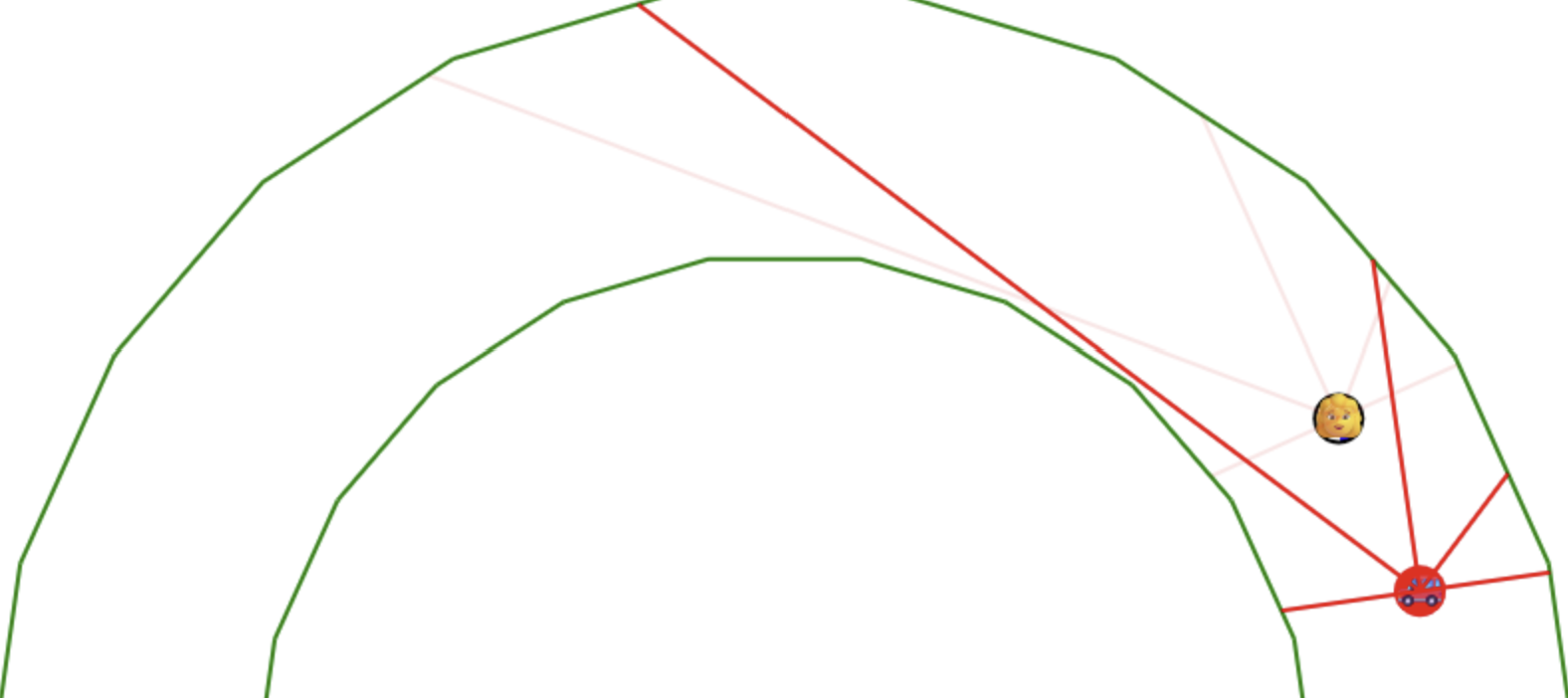 Project description: Train a neural network with 2 hidden layers (ReLU activation,
a maximum of 100 units in each layer) and input layer with k units, and output layer with 4 units
(softmax activation), where k is the number of sensors in front of the car. Drive the car around a 15-sided polygon
track maximizing total distance and minimizing k.
Project description: Train a neural network with 2 hidden layers (ReLU activation,
a maximum of 100 units in each layer) and input layer with k units, and output layer with 4 units
(softmax activation), where k is the number of sensors in front of the car. Drive the car around a 15-sided polygon
track maximizing total distance and minimizing k.
(1) Maximize distance.
(2) Minimize the number of k.
Strategy: I focused on goal (1) first and optimized goal (2) later.
(a) In order to achieve goal (1) I generated many training data myself that drove near the edge of the polygon. I used my data to do supervised learning and train the network. I optimized the k value and I was able to do well with k = 5.
(b) For my second car I wanted to be safe (being cautious of crashes, since if I crashed there was a penalty) so I made training data that ran near the center. I used this data to train the network.
A3: Cancer diagnosis with decision trees (team project)
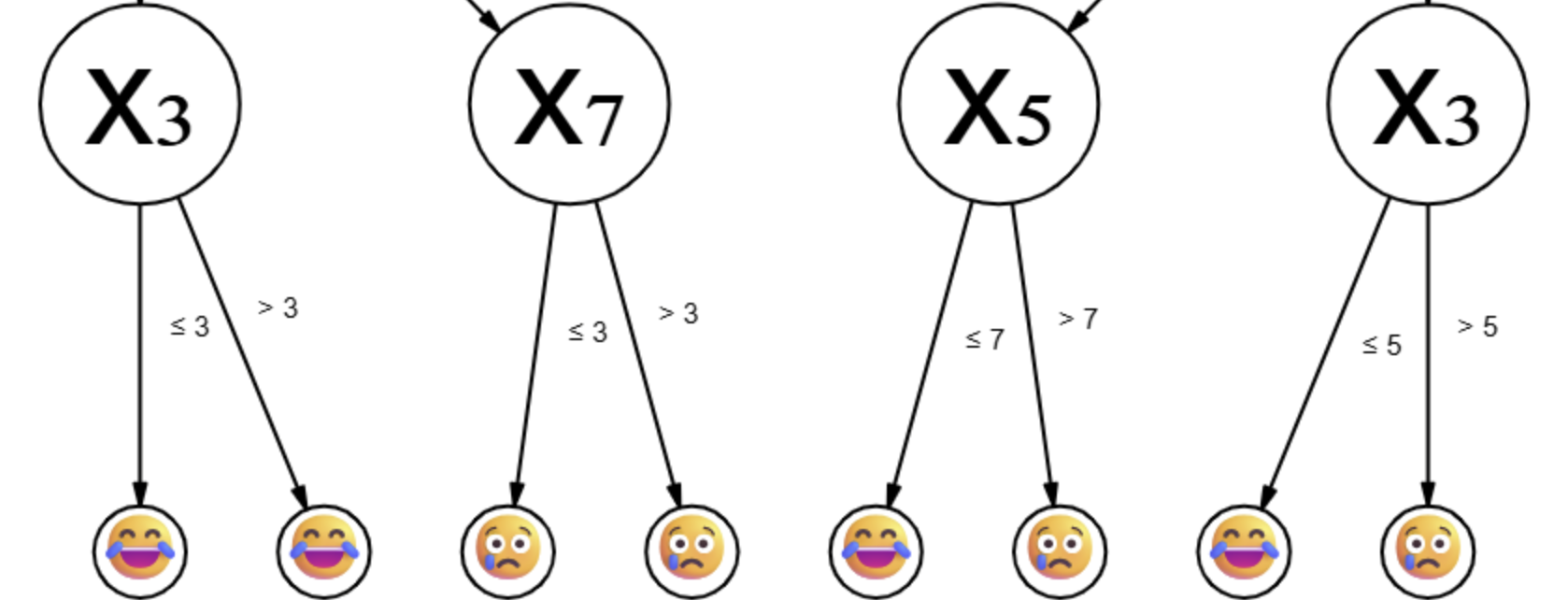 Project description: Build a decision tree to diagnose whether a patient
has cancer based on their medical test results. We used the Wisconsin Breast Cancer dataset. The score is
based on how much my tree classifies against the test set correctly and the smaller number of nodes I use.
The test set was composed of the patients chosen by the teaching team and the students. Students mostly
chose tricky patients.
Project description: Build a decision tree to diagnose whether a patient
has cancer based on their medical test results. We used the Wisconsin Breast Cancer dataset. The score is
based on how much my tree classifies against the test set correctly and the smaller number of nodes I use.
The test set was composed of the patients chosen by the teaching team and the students. Students mostly
chose tricky patients.
(1) Classify correctly.
(2) Use a smaller number of nodes.
Strategy: We could submit patients for the test set. I was part of a larger team and therefore we were sure our team could make some effect on the test set.
(a) Goals (1) and (2) conflict. Therefore we had to choose. My team chose to find the optimal number of nodes to classify all the patients in the data set correctly (goal (1)). That only needed 47 nodes for 683 patients. We got it using size-optimizing lookahead search that uses ID3's information-gain splitting criterion but replaces ID3's greedy split-selection with a lookahead that minimizes total tree size.
(b) We then submitted the trickiest patients for the test set. (So that players who used smaller nodes get penalized)
A4: Convolutional neural networks to classify hand-written digits of alien language (team project)
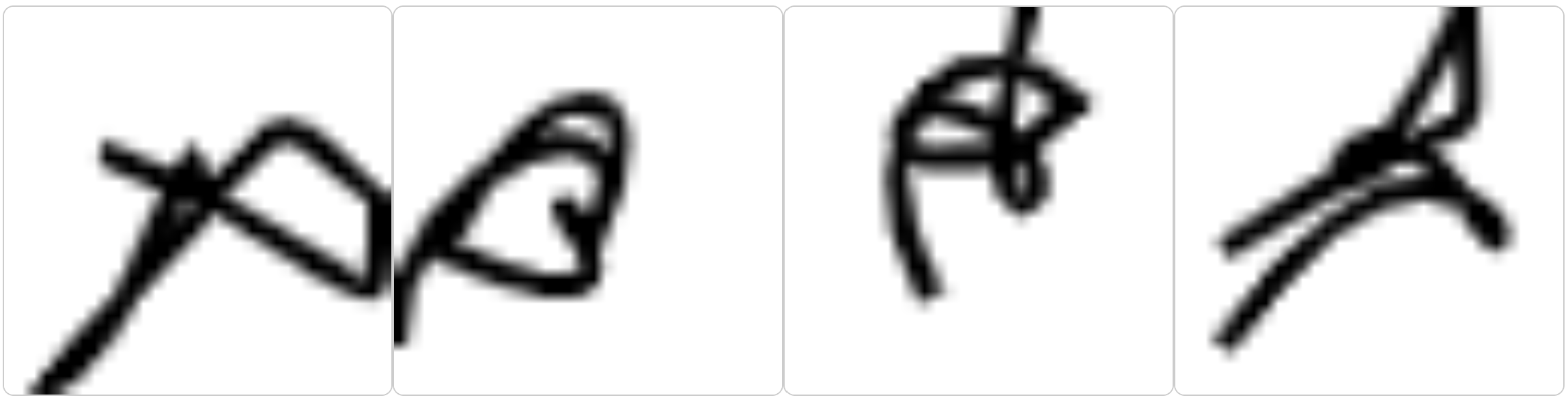 Project description: We are given a convolutional neural network to classify
digits of alien language (base 8). The alien language was 2/3/5 cubic bezier curves connecting random points.
Students get to choose from one of the 2(easy) / 3(medium) / 5(hard) bezier curves teams to compete in.
For each team, there is a
corresponding network with a groundtruth image of the 8 digits that only the teaching team knows.
We are only given the network and some examples of the alien language
to find what those 8 groundtruth digit images are.
Project description: We are given a convolutional neural network to classify
digits of alien language (base 8). The alien language was 2/3/5 cubic bezier curves connecting random points.
Students get to choose from one of the 2(easy) / 3(medium) / 5(hard) bezier curves teams to compete in.
For each team, there is a
corresponding network with a groundtruth image of the 8 digits that only the teaching team knows.
We are only given the network and some examples of the alien language
to find what those 8 groundtruth digit images are.
(1) Classified as {0,1,...,7} with higher certainty (in simple words, higher confidence).
(2) Actually getting the image correct (correct is defined as less than 200 pixels predicted incorrectly with the groundtruth images, this gave us a huge bonus).
Strategy: We understood that getting the image correct was hard at first. Therefore, we focused on getting a higher confidence first.
(a) Starting from random images and using PGD (Projected Gradient Descent), it was very easy to get the CNN to identify the image with higher certainty. However, the images were completely broken (meaning not even close to the actual example images the professor showed us), so we could not expect getting the image correct this way.
(After guaranteeing we could do goal (1) easily, we moved onto goal (2) since it gave a huge incentive to us. In order to achieve goal (2) we wanted to find a generalized pattern for each digit so that we could create a digit based on that pattern.)
(b) We made LLMs draw random cubic bezier curves. The intention was to get data samples. We considered curves that were above 0.8 confidence for a digit as a correct data for that digit. Surprisingly, team 5(hard) bezier curves was the easiest to make data. This led us to compete in this team.
(c) So with the data we started making images based on the particular pattern there was for each digit.
(We made a metric to evaluate the images we made.
It was called the hit rate. So for each digit we have many data for it.
For each data we check if we got it right (difference under 200 pixels).
Then for each digit we get a percentage like 88%.
(ex. For digit 0 suppose we have 9000 data. After we make an image based on the pattern,
we compare it with the 9000 data, and
then we have like 8000/9000 that are hit. That is how we get the hit rate for each digit.)
We tried optimizing the hit rate for each digit but there seemed to be a certain threshold we couldn't go above.)
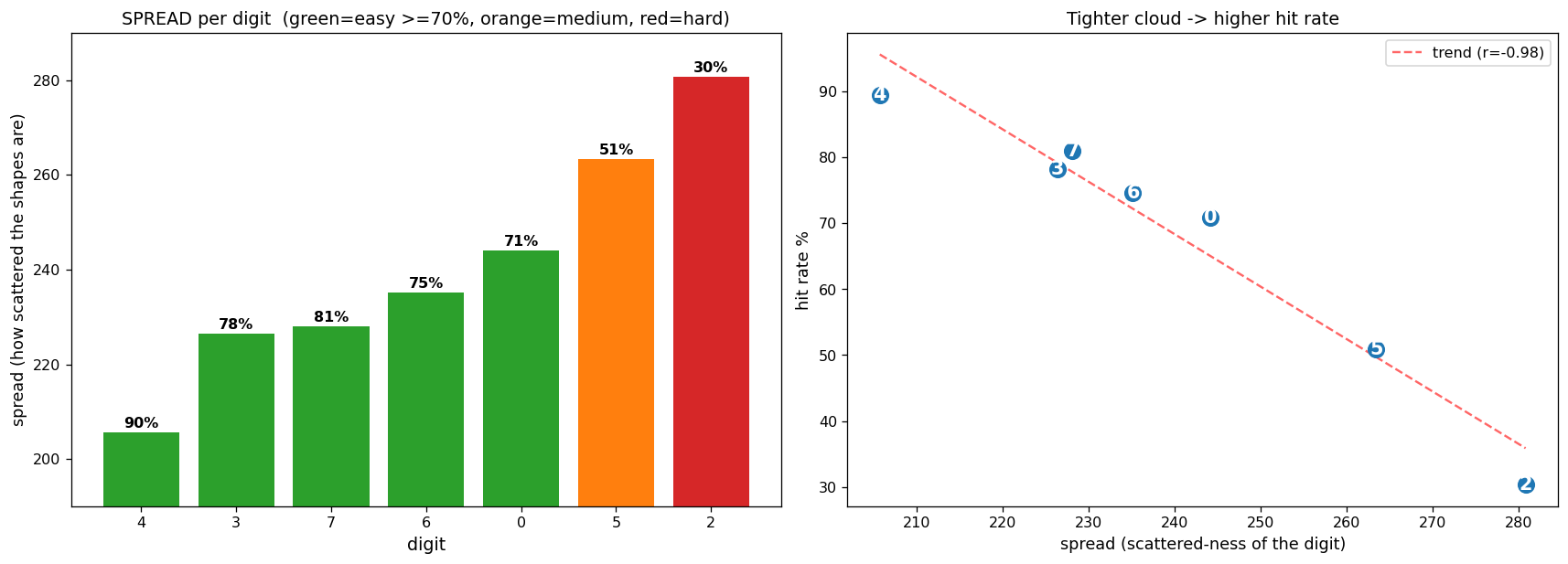
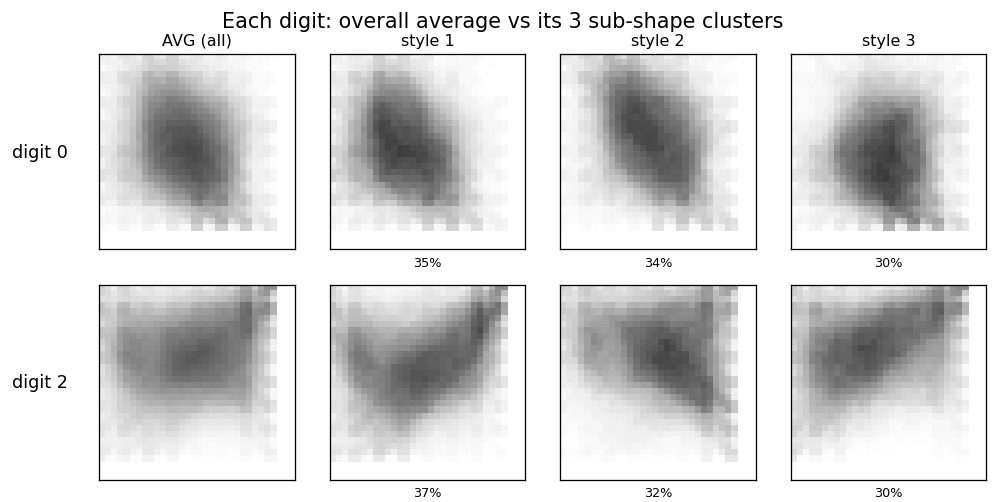
(d) Then we started investigating why (c) wasn't giving great answers. The hit rates were digit 4: 90%,
digit 3: 78%, digit 7: 81%, digit 6: 75%, digit 0: 71%, digit 5: 51%, digit 2: 30%. We thought there
might be different styles for each digit, and there was.
The more styles it had, the harder it was to generalize. So we decided to divide our group members'
images into different styles, so that if at least one got it right we all could get the bonus.
This improved our hit rates
as a team. When evaluating hit rate this time if anyone of us got it right we considered it as right.
Most of the digit's team hit rates were 85%~95%. We considered these as an actual percentage of getting it
right on the competition.
A5: Debate with the agent in the embedding space (team project)
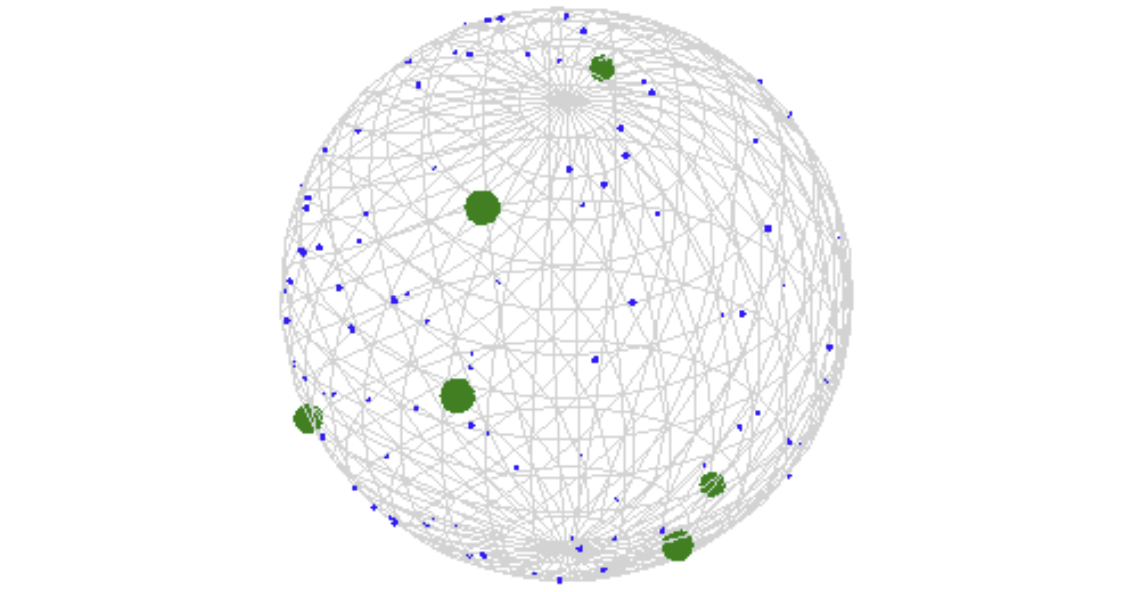 Project description: We debate with an agent to convince it of an opinion. There are six agents
(therefore six debate teams) to choose from and compete. Each person in a team prepares ten lists of english
sentences and one opinion. The agent uses the Universal Sentence Encoder to convert my ten sentences into
512 dimensional vectors in the embedding space and compute a weighted average with its original opinion vector.
Project description: We debate with an agent to convince it of an opinion. There are six agents
(therefore six debate teams) to choose from and compete. Each person in a team prepares ten lists of english
sentences and one opinion. The agent uses the Universal Sentence Encoder to convert my ten sentences into
512 dimensional vectors in the embedding space and compute a weighted average with its original opinion vector.
(1) Make the resulting average as similar as possible to my opinion.
A6: Eigenfaces for face recognition on blurry images (team project)
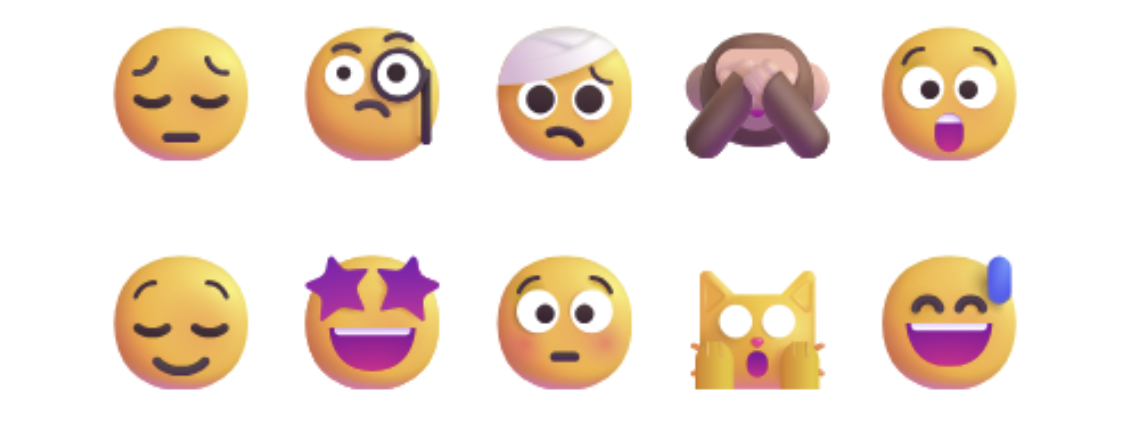 Project description: We use eigenfaces for some emojis and use K-NN to perform
face recognition on noisy and blurry versions of those emojis. There are 6 teams to compete in (different types of emojis).
There are 100 emojis in one team.
Everybody votes for 10 favorite emojis and the most popular suspects become the test set in the competition.
Project description: We use eigenfaces for some emojis and use K-NN to perform
face recognition on noisy and blurry versions of those emojis. There are 6 teams to compete in (different types of emojis).
There are 100 emojis in one team.
Everybody votes for 10 favorite emojis and the most popular suspects become the test set in the competition.
(1) K-NN prediction should be correct.
(2) Use a smaller number of eigenfaces.
Strategy: I was part of a large group in this competition. Therefore goal (1) was easier for me since if my team voted for the same 10 emojis, that would be the test set. I would be able to test until I get the right eigenfaces for this. So my team could choose from two options. Make a hard test set so we penalize the others with getting the prediction wrong or we could make a very easy test set and use a smaller number of eigenfaces. We chose the second one.
(a) In order to achieve goal (2) we tried many things other than just relying on the suspect list. Weighting our suspects, weighting our confusers down, training only on our suspects and maybe some confusing emojis. None of them led to a smaller number of eigenfaces.
(b) The one thing that affected the number of eigenfaces eventually was plain PCA (Principal Component Analysis) on special suspects that were easily differentiable and well survived the corruption (noise = 10, blur = 1). We were able to find the best suspect list for each of the teams. Most were available with 3 or 4 eigenfaces. (We could even lower the number of eigenfaces however, there was a risk of lowering it because it might actually get the K-NN prediction wrong. We had to look at this as a probability game since the noise = 10 and blur = 1 was randomly applied on the image, so sometimes the K-NN prediction came out wrong)
A7: Shopping at the lowest price with greedy search (solo project)
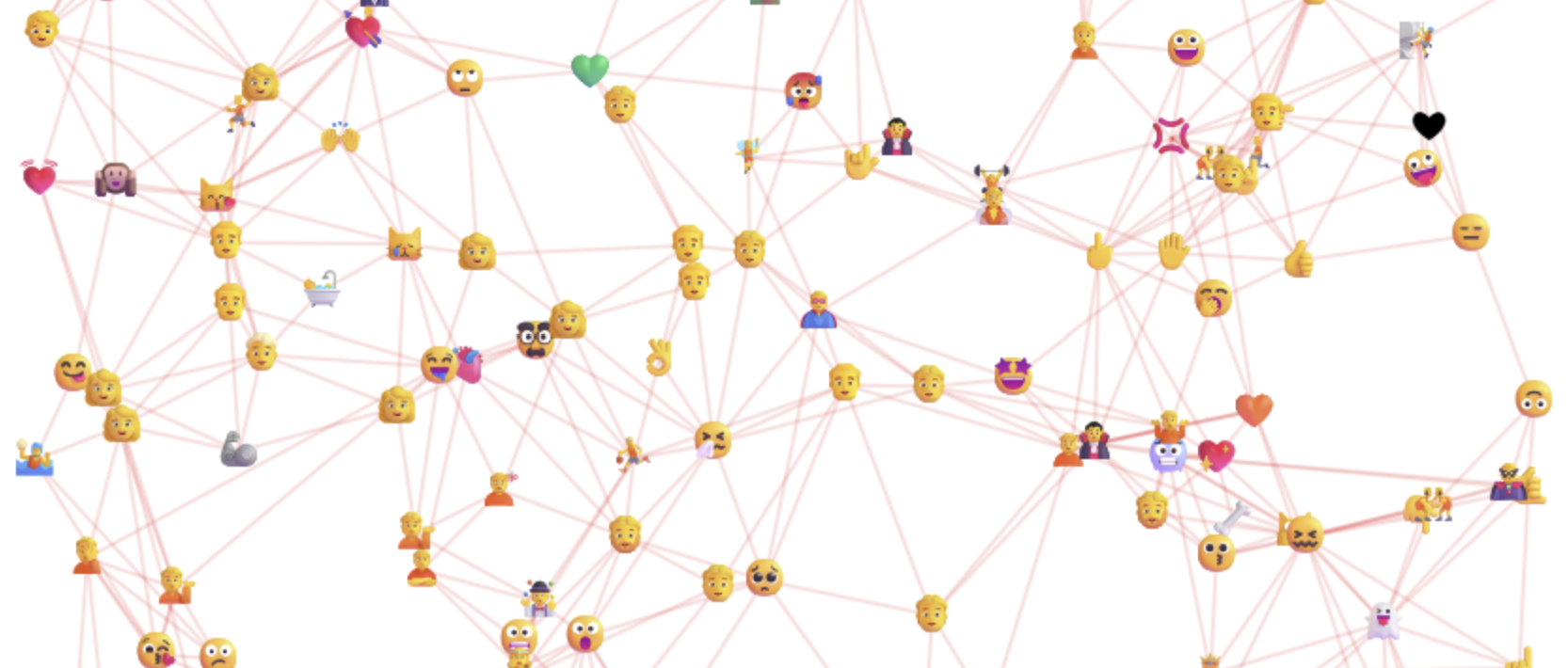 Project description: We have two cars to pick up groceries.
For each map there is a graph, we have to submit two routes to get as many items from our individual
shopping list at the lowest price. Our score is the sum of (10 - price) for each shopping item we got
with the total distance of moving limited to 5000 miles.
Project description: We have two cars to pick up groceries.
For each map there is a graph, we have to submit two routes to get as many items from our individual
shopping list at the lowest price. Our score is the sum of (10 - price) for each shopping item we got
with the total distance of moving limited to 5000 miles.
(1) Get the item quickly. (If someone else takes the item, I lose it)
(2) Achieve high score.
Strategy: First you have to identify your items. You have to recognize what is hard to get and easy to get. Hardest = scarce + cheap, medium = scarce + pricey, easy = abundant. This sets you up for goal (1) and (2).
(a) In order to get the item quickly. The only consideration is the distance to the item since the speed is fixed (every car has the same speed). Therefore, to achieve goal (1) you have to pick the starting point near the hardest items.
(b) After picking the good starting point, I used greedy, beam, local search with fixed weights hardest as 6, medium as 4, easy as 1 so that the route was biased to securing hard items first. This made me able to achieve goal (2).
A8: Connect Four using policy neural networks (solo project)
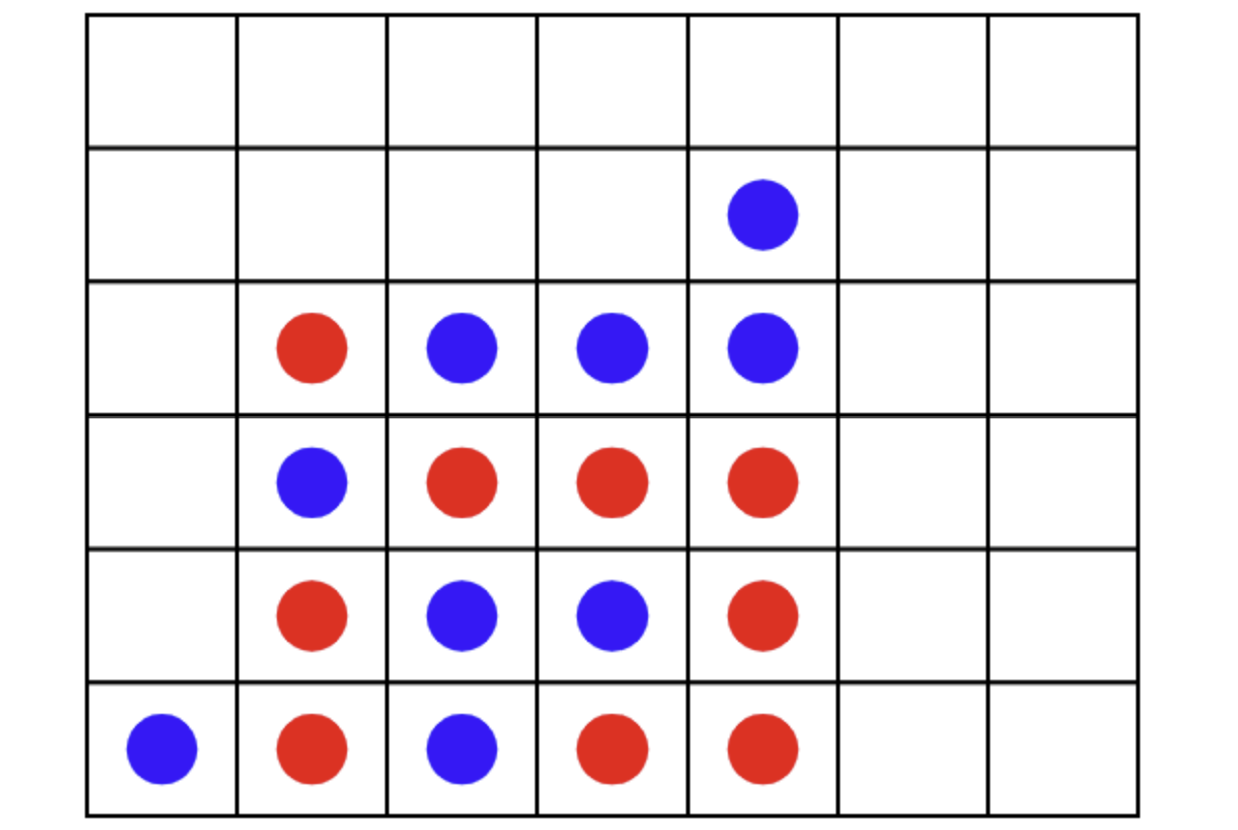 Project description: Using a deterministic policy neural network
(2 hidden layers with ReLU activation and softmax output layer with 7 units) we play connect four
against other students. The score is calculated as w + 0.5t - (1/42)h (w: number of wins, t:
number of ties, h: number of hidden units).
Project description: Using a deterministic policy neural network
(2 hidden layers with ReLU activation and softmax output layer with 7 units) we play connect four
against other students. The score is calculated as w + 0.5t - (1/42)h (w: number of wins, t:
number of ties, h: number of hidden units).
(1) Win or tie as much as possible.
(2) Use smaller number of hidden units.
Strategy: I had the choice of using imitation learning, RL, imitation learning + RL. Personally I have tried all of them out and imitation learning was the best. The overall system was choose a teacher and train my network.
(a) I focused on goal (1) first. First I focused on making a good teacher. There were a lot of choices to make. I could choose minimax or monte carlo tree search as the algorithm. I had to make decisions about the depth and heuristic as well. The teacher I eventually used was the minimax algorithm with depth 3. My heuristic was windowed threat scoring (rewarding my near-complete lines, penalizing the opponent's, ignoring dead windows) plus a center bonus. I made data from this teacher and trained my network. For testing my network I used a metric called "win rate" which was the win rate against some opponents I made. The opponents were random, network with easy heuristic, my network with smaller hidden units, my network with larger hidden units, and minimax (the teacher itself).
(b) Something important I noticed through the trial was that, my network wasn't really picking rational choices. I investigated the reason why and the reason was because of how I trained it. The teacher (minimax algorithm) didn't make any mistakes like my network did. It was just my network that was making dumb choices. Therefore I realized I wasn't careful with the data I gave to my network to train. The data I generated were random board positions and the best moves given from the teacher. I intentionally gave more common-sense positions (positions where you must place, ex. where there are already 3 pieces) as the data. This boosted my win rate. However, it wasn't always 100 percent since there was a limit to the unit size.
(c) Next in order to achieve goal (2), I tested my network with lots of combinations of hidden layers. 16x16, 16x32, 32x32, 64x64... The best combination for me was 32x32.
A9: Flappy bird using deep reinforcement learning (solo project)
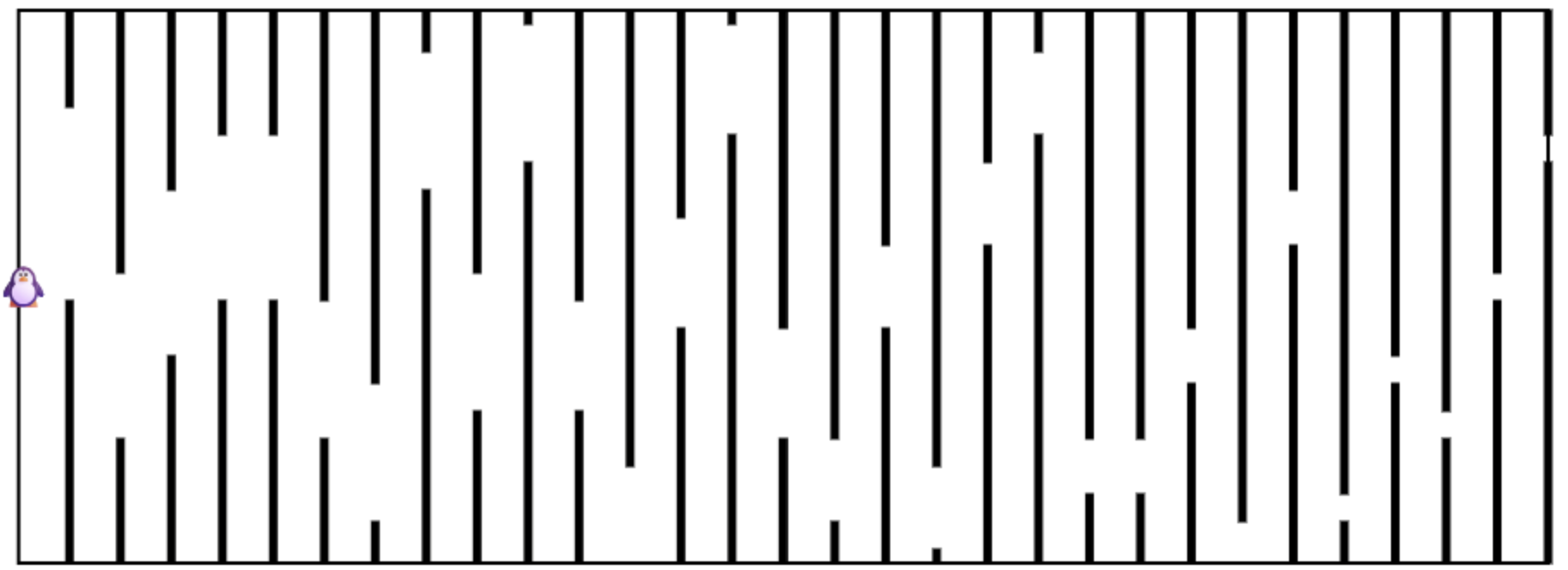 Project description: Train a neural network to play flappy bird. We are able to have
three inputs horizontal and vertical distances to the top and bottom of the next obstacle or pipe, and one output
(whether to flap, 0 means no flap, 1 means flap). We can have
two hidden layers with a maximum of 100 units in each layer, ReLU activation in hidden layers,
and logistic activation in the output layer. We get +10 for the pipes we pass, -z when we hit the pipe at z units
away from the center of the gap, +20 if we get through all the pipes. (The maps are random!)
Project description: Train a neural network to play flappy bird. We are able to have
three inputs horizontal and vertical distances to the top and bottom of the next obstacle or pipe, and one output
(whether to flap, 0 means no flap, 1 means flap). We can have
two hidden layers with a maximum of 100 units in each layer, ReLU activation in hidden layers,
and logistic activation in the output layer. We get +10 for the pipes we pass, -z when we hit the pipe at z units
away from the center of the gap, +20 if we get through all the pipes. (The maps are random!)
(1) Pass the pipes.
(2) Near the center of the gap.
Strategy: I tried imitation learning, imitation learning + RL, RL only to train the network. Eventually I chose using RL only. I will write about the whole process for this since I wasn't able to get through the whole map. Maybe you can.
(a) First I tried imitation learning with the given data from Part 1 and Part 2 (the regular components). The data was basically Q-value iteration until we got the optimal action for an environment. With a reasonable reward I was able to pass about 17 pipes. I tried many kinds of rewards. I gave wall-avoidance penalties of many shapes (flat, -1/d, -1/d², -1/d³), asymmetric (harsher on the ceiling since a +3 flap overshoots easily), tried going near the edges since sometimes if I aim to the center of the gap I crash into the ceiling or floor. There was a limit to this approach. I wasn't able to pass further than 17 pipes.
(b) Second I tried RL on top of imitation learning. So from the network that trained above, I tried RL on top of it.
However this never pushed my scores. Lastly I pivoted to RL only. I started with REINFORCE and switched to either
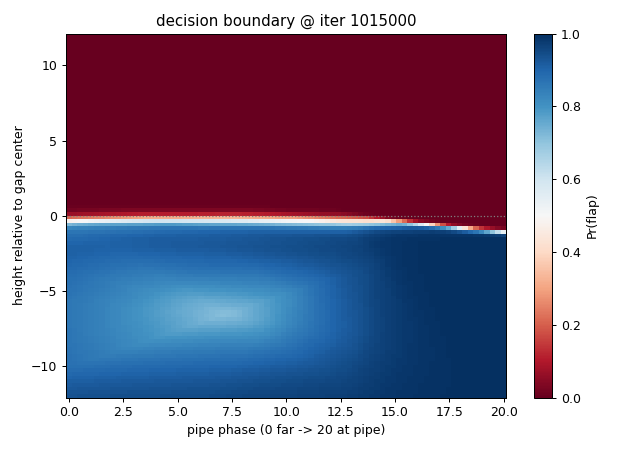
A2C or PPO. This seemed to make the decision boundaries sharper. These kinds of approaches made my bird
go through about 20 pipes. But that was the end for it. I tried changing my rewards and the training time. One thing
for sure is that I trained my network overnight. It made it worse. My bird's decision boundary became very smudgy
and it seemed it had overfitted to my test maps. So eventually I submitted my network with a training time of like
1 hour?
A10: Soccer game with multi agent reinforcement learning (solo project)
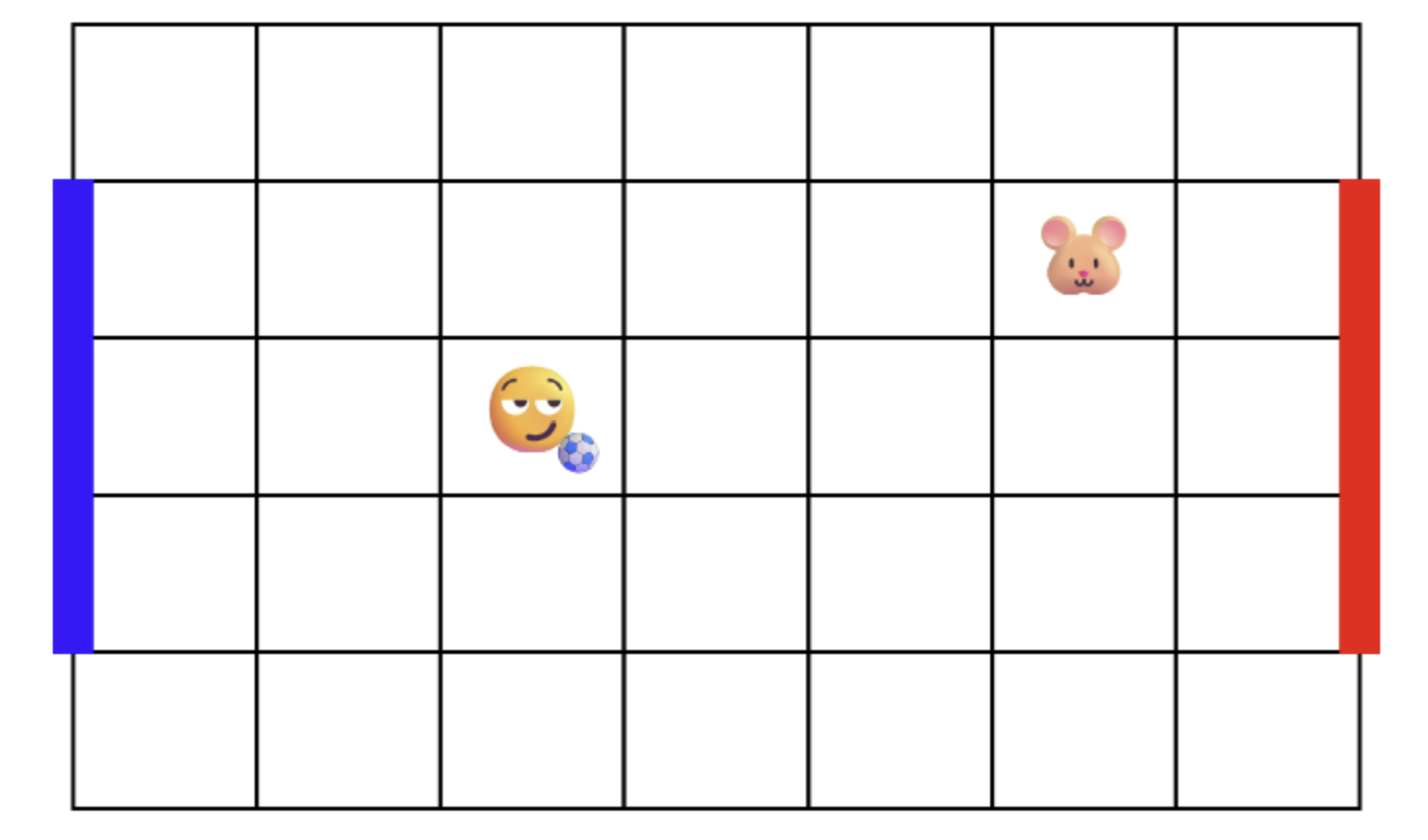 Project description: Train a policy network (5 input units, 2 hidden layers,
fewer than 100 units in each layer, ReLU activation, and 4 output units (for up, down, left, right), softmax activation)
to play soccer with other policies in a 7x5 grid. The score was calculated mostly with wins and ties (w + 0.5t).
Project description: Train a policy network (5 input units, 2 hidden layers,
fewer than 100 units in each layer, ReLU activation, and 4 output units (for up, down, left, right), softmax activation)
to play soccer with other policies in a 7x5 grid. The score was calculated mostly with wins and ties (w + 0.5t).
(1) Win as much as possible.
(2) Tie if you can't win.
Strategy: There were two things I thought of solving the markov game presented here. One was minimax value iteration the other was deep MARL. I eventually picked value iteration and did supervised learning.
(a) The truth was that the state space was small. The state is (x0, y0, x1, y1, b) so the upper bound was 35x34x2 = 2380 (since two players can't share the same cell). Therefore instead of deep MARL I computed the game theoretic value against the worst case opponent for every state (minimax value iteration). I trained my network with this just as supervised learning. However, I did have a decision to make. I could make a safe policy which was pure minimax, this never loses to anyone but it ties to irrational opponents because it always expects for a rational good player. On the other hand, I had an aggressive policy by changing the safe policy with a relaxed safety filter and a more aggressive tie break. It beat many more irrational players but sometimes it lost against strong players. Therefore, in order to achieve goal (1) and (2) I eventually submitted the safe policy network. (I actually thought about an opponent-adaptive strategy where you normally play the safe policy but switch to an aggressive policy once you realize it is a irrational player which becomes like a bayesian game/POMDP. But representing memory in the current network architecture could not be done)